- Home
- Guide to This Website
- Take Action for Human Rights
- Disabled
- GHB - Xyrem
- Human Rights
- Human Persons vs Corporations
- Law Enforcement
- Legal
- Mental Health Rights
- Medical Fraud
- PTSD
- Psychiatric Rights
- Residental Treatment Abuse
- Sexual Assault
- Whistleblowers
- Native American
- Women's Rights
- Aertoxic Syndrome
- Food & Drug Administration - Off Label
- The Emperor's New Clothes
- NAFTA Foreign Investor Privileges
- MWAN UN Reports
- Supreme Court Decision - Citizens United
- Do You Know What a Dragon Looks Like?
- Mass Murder and Psychiatric Drugs
- Patients not Consumers
- La Experimentación no Consensual Spanish
- Medical Deferred Action Immigration Cases
- Voting Rights for Residents of the District of Columbia
- Benefits Trafficking
“All human beings are born free and equal in dignity and rights. They are endowed with reason and conscience and should act towards one another in a spirit of brotherhood.”
Universal Declaration of Human Rights
Article 1
Visitors
2335756
The Convention on the Rights of the Child
 In 1989, the United Nations General Assembly adopted the Convention on the Rights of the Child (CRC). This United Nations document is a comprehensive international children's rights treaty that addresses children's civil, political, economic, social, and cultural rights. The CRC sets goals and standards that promote children's rights, thereby strengthening governmental initiatives to serve children and families while recognizing the role and authority of families and the importance of governmental policies that ensure children's optimal development in their families and communities.
The United States and Somalia are the two countries that have not ratified the CRC. 192 other countries have ratified it making it one of the most ratified international treaties.
Please encourage your governmental representatives to ratify this important human rights treaty.
The Convention on the Rights of the Child promotes these basic principles:
Article 1 (Definition of the child): The Convention defines a 'child' as a person below the age of 18, unless the laws of a particular country set the legal age for adulthood younger. The Committee on the Rights of the Child, the monitoring body for the Convention, has encouraged States to review the age of majority if it is set below 18 and to increase the level of protection for all children under 18.
Article 2 (Non-discrimination): The Convention applies to all children, whatever their race, religion or abilities; whatever they think or say, whatever type of family they come from. It doesn’t matter where children live, what language they speak, what their parents do, whether they are boys or girls, what their culture is, whether they have a disability or whether they are rich or poor. No child should be treated unfairly on any basis. ‘
 Article 3 (Best interests of the child): The best interests of children must be the primary concern in making decisions that may affect them. All adults should do what is best for children. When adults make decisions, they should think about how their decisions will affect children. This particularly applies to budget, policy and law makers.
Article 4 (Protection of rights): Governments have a responsibility to take all available measures to make sure children’s rights are respected, protected and fulfilled. When countries ratify the Convention, they agree to review their laws relating to children. This involves assessing their social services, legal, health and educational systems, as well as levels of funding for these services. Governments are then obliged to take all necessary steps to ensure that the minimum standards set by the Convention in these areas are being met. They must help families protect children’s rights and create an environment where they can grow and reach their potential. In some instances, this may involve changing existing laws or creating new ones. Such legislative changes are not imposed, but come about through the same process by which any law is created or reformed within a country. Article 41 of the Convention points out the when a country already has higher legal standards than those seen in the Convention, the higher standards always prevail.
 Article 5 (Parental guidance): Governments should respect the rights and responsibilities of families to direct and guide their children so that, as they grow, they learn to use their rights properly. Helping children to understand their rights does not mean pushing them to make choices with consequences that they are too young to handle. Article 5 encourages parents to deal with rights issues "in a manner consistent with the evolving capacities of the child". The Convention does not take responsibility for children away from their parents and give more authority to governments. It does place on governments the responsibility to protect and assist families in fulfilling their essential role as nurturers of children.
Article 6 (Survival and development): Children have the right to live. Governments should ensure that children survive and develop healthily.
Article 7 (Registration, name, nationality, care): All children have the right to a legally registered name, officially recognised by the government. Children have the right to a nationality (to belong to a country). Children also have the right to know and, as far as possible, to be cared for by their parents.
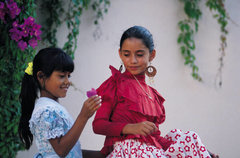 Article 8 (Preservation of identity): Children have the right to an identity – an official record of who they are. Governments should respect children’s right to a name, a nationality and family ties.
Article 9 (Separation from parents): Children have the right to live with their parent(s), unless it is bad for them. Children whose parents do not live together have the right to stay in contact with both parents, unless this might hurt the child.
Article 10 (Family reunification): Families whose members live in different countries should be allowed to move between those countries so that parents and children can stay in contact, or get back together as a family.
Learn more:Summit for the Convention on the Rights of the Child: Mobilizing Communities for Ratification
Learn more about child rights
Read the full text of the Convention on the Rights of the Child
Download a report on the impact of the implementation of the Convention (PDF)
Yousou N'dour Lang
“Too often we underestimate the power of a touch, a smile, a kind word, a listening ear, an honest compliment, or the smallest act of caring, all of which have the potential to turn a life around.”
― Leo Buscaglia
Medical Whistleblower Advocacy Network
MEDICAL WHISTLEBLOWER ADVOCACY NETWORK
P.O. 42700
Washington, DC 20015
MedicalWhistleblowers (at) gmail.com
CONTACT
Educational Materials from Medical Whistleblower

Medical Whistleblower Canary Brochures
Advice to Medical Whistleblowers
Advice to Whistleblower Supporters
The Spiritual Side of Whistleblowing
Your Problem Solving Personality
PTSD - Emotional and Psychological Symptoms
Effects of Whistleblower Retaliation
Behind the Blue Line - Law Enforcement Whistleblowers
Medical Whistleblower Canary Notes
Bridging the Gap - Communicating Across Disciplines
Martin Luther King Jr. , Title 42 and 1983
White Collar Crime and Criminal Intelligence
United Nations Declaration of Human Rights
"Never impose on others what you would not choose for yourself." Confucius
"It is not the critic who counts; not the man who points out how the strong man stumbles, or where the doer of deeds could have done them better. The credit belongs to the man who is actually in the arena, whose face is marred by dust and sweat and blood; who strives valiantly; who errs, who comes short again and again, because there is no effort without error and shortcoming; but who does actually strive to do the deeds; who knows great enthusiasms, the great devotions; who spends himself in a worthy cause; who at the best knows in the end the triumph of high achievement, and who at the worst, if he fails, at least fails while daring greatly, so that his place shall never be with those cold and timid souls who neither know victory nor defeat."
Theodore
Roosevelt- Excerpt from the speech "Citizenship In A Republic",
delivered at the Sorbonne, in Paris, France on 23 April, 1910