- Home
- Guide to This Website
- Take Action for Human Rights
- Disabled
- GHB - Xyrem
- Human Rights
- Human Persons vs Corporations
- Law Enforcement
- Legal
- Mental Health Rights
- Medical Fraud
- PTSD
- Psychiatric Rights
- Residental Treatment Abuse
- Sexual Assault
- Whistleblowers
- Native American
- Women's Rights
- Aertoxic Syndrome
- Food & Drug Administration - Off Label
- The Emperor's New Clothes
- NAFTA Foreign Investor Privileges
- MWAN UN Reports
- Supreme Court Decision - Citizens United
- Do You Know What a Dragon Looks Like?
- Mass Murder and Psychiatric Drugs
- Patients not Consumers
- La Experimentación no Consensual Spanish
- Medical Deferred Action Immigration Cases
- Voting Rights for Residents of the District of Columbia
- Benefits Trafficking
“All human beings are born free and equal in dignity and rights. They are endowed with reason and conscience and should act towards one another in a spirit of brotherhood.”
Universal Declaration of Human Rights
Article 1
Visitors
2336229
"In giving rights to others which belong to them, we give rights to ourselves and to our country."
John Fitzgerald Kennedy
(American 35th US President
(1961-63), 1917-1963)
Informed Consent is a Requirement not a Courtesy
The Nuremberg Code arose as part of the trial of the United States v. Karl Brandt. Karl Brandt and others were tried at Nuremburg for crimes against humanity committed in their roles as the Nazi high command. The case was United States v. Karl Brandt et al., "The Medical Case, Trials of War Criminals before the Nuremberg Military Tribunals under Control Council Law No. 10" (Washington, D.C.: U.S. Government Printing Office, 1949) On August 19, 1947, the judges delivered their verdict in the against Karl Brandt and several others and also expressed their opinion on medical experimentation on human beings. Dr. Leo Alexander had submitted to the Counsel for War Crimes six points defining legitimate medical research. The trial verdict adopted these points and added an extra four. The ten points constituted the "Nuremberg Code". Although the legal force of the document was not established and it was not incorporated directly into either the American or German law, the Nuremberg Code and the related Declaration of Helsinki are the basis for the Code of Federal Regulations Title 45 Volume 46, which are the regulations issued by the United States Department of Health and Human Services governing federally-funded research in the United States.
45 CFR 46 Protection Of Human Subjects
Guidelines for Conduct of Research Involving Human Subjects at NIH (Gray Booklet) (pdf file)
The Belmont Report Ethical Principles and Guidelines for the Protection of Human Subjects of Research
Nuremberg Code Directives for Human Experimentation
World Medical Association Declaration Of Helsinki
In the United States governmental agencies which legally participate in human experimentation, like the Department of Health, Education and Welfare and its subsidiaries like the National Institute on Health (NIH) and the National Institute on Drug Abuse (NIDA) must have legal policies and regulations which include standard "human consent forms" to be filled out by participants to acknowledge that they are participating in human experimentation, thus keeping the United States government in compliance with the Nuremberg Code of International Law and other international
"Informed consent is a requirement, not a courtesy," says Yvette Pearson, a visiting professor for philosophy who teaches bioethics at Old Dominion University in Norfolk about the secret experiment. "Even if it was completely undebatable, even if we know it is perfectly safe, it's still the case that you ask people for their consent. You ask parents for consent to do things to their children."
Psychiatric Forced Drugging & Informed Consent US Legal Cases
Mills v. Rogers, 457 U.S. 291, 299 (1982)
Rennie v. Klein, 476 F. Supp. 1294, 1313 (D.N.J. 1979).
Brandt v. Monte, 626 F. Supp.2d 469, 486 (D.N.J. 2009) (citing Rochin v. California, 342 U.S. 165, 172-74 (1952))
Brandt, 626 F. Supp.2d at 486 (citing Lawrence v. Texas, 539 U.S. 558, 562 (2003)
Mills, 457 U.S. at 293 n.1, and “alter the chemical balance in a patient’s brain, leading to changes . . . in his or her cognitive processes.” Harper, 494 U.S. at 229.
Scott v. Plante, 532 F.2d 939, 946 (3d Cir. 1976)
"The makers of our constitution undertook to secure conditions favorable to the pursuit of happiness... They sought to protect Americans in their beliefs, their thoughts, their options and their sensations. They conferred, as against the government, the right to be let alone, the most comprehensive of the rights and the right most valued by civilized men."
Justice Louis D. Brandeis
(1856-1941) US Supreme Court Justice
Source: Olmstead v. United States, 1928
What is Informed Consent?

Engaging in an informed-consent process between a clinical doctor and a patient should be an essential part of the standard of care in medicine. Informed consent is a process, not just a formality, and engaging in that process is of the essence of good medical care. Information must be provided to the patient in a timely manner and in accordance with the accepted standard of practice among members of the profession with similar training and experience. A health care professional may be legally liable if a patient does not give "informed consent" to a medical procedure and it results in harm to patient even if the procedure is properly performed. In a legal case Meador v. Stahler and Gheridian (Middlesex Superior Court C.A. No. 88-6450, Mass. 1993) a woman, Mary Meador, and her family were awarded approximately $1.5 million for damages resulting from a cesarean section which Meador claimed she neither wanted nor needed. As many patients do, Mary Meador signed a pro forma informed consent paperwork after being told that the cesarean section would only be done in case of an emergency. The minimal requirements of pro forma standard informed consent [i] are that the physician must obtain the patient's consent after informing the patient of the material risks of the proposed procedure. Meador's physicians did meet this minimal requirement. But the physicians in this case did not give Mary Meador the benefit of a dialogue to discuss the decision to have surgery rather than a vaginal birth and disregarded her wishes to give birth vaginally even when she was well into labor. Dr. Harold J. Bursztajn, Associate Clinical Professor and Co-Director, Program in Psychiatry and the Law, Harvard Medical School at the Massachusetts Mental Health Center, was the forensic psychiatrist providing testimony regarding the Post Traumatic Stress suffered by Mary Meador when the cesarean surgery was performed against her wishes and without the expedient circumstances of an emergency to justify the need for surgery. There were residual physical complications of the cesarean section as well as feeling of helplessness and horror that resulted from the sudden devastating loss of control the patient felt when the surgery was performed against her wishes. A thorough and ongoing informed-consent process must be one in which medical doctors engage in a positive process of discussion with patients and families, so that grief, misplaced blame, and feelings of helplessness, powerlessness, and abandonment do not lead to a bad outcome and precipitate a malpractice lawsuit. Adequate informed-consent process is not just a risk management process, it is good medical practice.
In the medical field, good clinical practice is to adhere to the standards of informed consent. Informed consent as practiced in hospitals and clinics in the United States is reviewed and approved by an Institutional Investigational Review Board (IRB). [ii] But as the case above demonstrates, a simple adherence to the letter of the law, without true adherence to the actual principles of fully informed consent, is not sufficient for true quality medical care. General guidelines, such as those proposed by the AMA require patients to be informed of:
1) the nature of their condition and the proposed procedure,
2) the purpose of the procedure,
3) the risks and benefits of the proposed treatments,
4) the probability of the anticipated risks and benefits,
5) alternatives to the treatment and the associated risks and benefits,
6) the risks and benefits of not receiving the treatment or procedure.
Informed consent should define risks and potential benefits, but also take into consideration alternative treatments. Informed consent is an agreement to do something or to allow something to happen, made with complete knowledge of all relevant facts, such as the risks involved. A healthcare provider or facility may be held responsible for an injury caused by an undisclosed risk. Thus it is especially necessary to get prior informed consent for any invasive procedure or an experimental procedure that may involve human subjects. In many situations, the failure to obtain informed consent is a form of medical negligence, and may even give rise to a cause of action for battery. In any medical trials or experiments that receive federal funding, informed consent must be obtained from any human participant or subject obtaining informed consent is an absolute necessity.
 The administrative duty of obtaining the signature on the consent form is not the same as obtaining the consent, which is actually done by the physician. The signature means that the nurse witnessed the patient sign but remember informed consent is NOT the form. True informed consent is explaining to the patient all their rights including their right to not have treatment as well as all pertinent information regarding the treatment or procedure. [iii] Often in legal cases brought to court there was a signed form but some important information was not shared with the patient that would have caused the patient to decline the treatment or undergoing the procedure.
Thus in clinical or research studies additional informed consent must be used to protect the human rights of the subjects. This is especially true if the human subject is going to undergo any evaluation, testing, treatment or procedure that is not part of standard medical care. When the human subject or patient involvement in the clinical or research study might in some way modify or impact the course of their care then they must be provided a study-specific informed consent. There are specific criteria defined by the Institutional Human Investigation Committees. A patient can choose to leave the study at any time for any reason and the patient does not have to give a reason. In addition it is imperative that their decision to withdraw will not impact their further medical care. These standards of informed consent are applicable even when "no standard of treatment" for their condition is even available.
 The principle of Free, Prior and Informed Consent is an important human right which has been addressed in many international and domestic laws and practices. The U.S. is party to the Universal Declaration of Human Rights (UHDR), the International Covenant on Civil and Political Rights (ICCPR), the Convention against Torture (CAT), and the International Convention on the Elimination of Racial Discrimination (CERD), all of which must be applied without discrimination based on disability. The U.S. has signed but not yet ratified the Convention on the Rights of Persons with Disabilities (CRPD), as well as the Convention on the Rights of the Child (CRC) and the International Covenant on Economic, Social and Cultural Rights (ICESCR). The human rights of patients are also delineated in the Universal Declaration on Bioethics and Human Rights [iv].
For those who are disabled the human right of informed consent has been repeatedly violated in the U.S. Despite the enactment of the Americans with Disabilities Act (ADA) which prohibits discrimination based on disability in employment, by state and local governments, and in public accommodations, and despite other enactments such as the Rehabilitation Act (of which Section 504 prohibits disability-based discrimination by federal agencies), the Fair Housing Act Amendments, and the Individuals with Disabilities Education Act (IDEA). Despite the policy of non-discrimination articulated by these laws, there are many aspects of federal and state law and policy that are contrary to the principles of the ADA but remain in force.
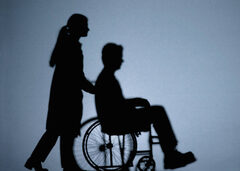
Often guardianship and the use of surrogate decision-makers is used to circumvent informed consent rather than making an honest attempt to discern the wishes of the person. [i] To refuse to recognize the individual patient's human right to informed consent is contrary to the recognition of the legal capacity of persons with disabilities on an equal basis with others, as required by CRPD Article 12 (to which the U.S. is a signatory) and constitutes discrimination based on disability under UDHR Articles 2 and 6, and ICCPR Article 26.
C hildren and young people have limited or no ability to make their own medical choices. Parents and guardians often are not given full information about treatment options. In the foster care system parents lose custody of their children and the children are not permitted to refuse treatment or have any meaningful input into the treatment they receive. Thus in the U.S.A we have a system of institutionalized injustice to minors entrusted to the Foster Care system. Coming from backgrounds of abuse and trauma, these emotionally vulnerable young people are exposed to physical, emotional, psychological and sexual abuse often occurs in youth psychiatric facilities. Often these young people have committed no crime but are detained against their will and decisions about their care is made based on the type of health insurance they have (public or private) rather than their health needs. In the U.S. institutions are often overcrowded, poorly maintained. This is both unjust and discriminatory. Not surprisingly foster children exposed to such situations are unable to adjust to independent living when they reach adulthood and end up in large numbers in the U.S. prison system as adults. In addition the pharmaceutical industry's successful marketing of drugs to this captive population of children has lead to children as young as two years old given mood stabilizers and antipsychotics even before they are even able to speak. It is estimated that over 8 million children are drugged in the U.S.A. with 1,300 deaths due to this practice. [ii]
The Court of Appeals case Rivers v. Katz [iii], governs compulsory inpatient treatment in New York . Rivers established that involuntary "patients" have the right to refuse treat me nt if they are capable of making rational decisions about treatment, however, if found "incapable," the court may order compulsory treatment based on its assessment of factors such as risks and benefits. Courts nearly always find incapacity and order compulsory treatment, without giving reasons, suggesting that "incapacity" is difficult to separate from a diagnosis of mental illness. The use of a capacity standard to deprive people of the right to control their own body and health discriminates based on disability, and violates U.S. obligations under Universal Declaration of Human Rights. [iv]
In situations of civil commitment [v] and compulsory mental health treatment the U.S. Supreme Court recognizes that although there are infringements of the liberty interest (a Constitutional Right) but asserts that these infringements are justified by state interests. [vi] These practices pose a serious violation of mental and physical integrity by their close connection with disability-based discrimination, as analyzed by UN Special Rapporteur on Torture Manfred Nowak. [vii]
To be in compliance of international recognized standards regarding the human right of informed consent the U.S.A. should ratify the CRPD, CRC and ICESCR without any reservations, understandings or declarations, and without further delay. It is important that the standard for review of disability-based discrimination under the U.S. constitution be consistent with the common standard under international law for discrimination based on race, sex and disability. In addition we should ensure that guardianship is abolished and replaced by a system of support for people to make their own decisions. There should be a comprehensive review at both the federal and state levels, with the participation of persons with disabilities to abolish all laws and mechanisms that restrict the legal capacity of any person especially those with disabilities, and to create supportive measures for the exercise of legal capacity that respect the will and preferences of the person. [viii]
For reference I summarize the Principles of the Universal Declaration on Bioethics and Human Rights below.
The Universal Declaration on Bioethics and Human Rights Principles
Within the scope of this Declaration, in decisions or practices taken or carried out by those to whom it is addressed, the following principles are to be respected.
Article 3 Human dignity and human rights
1. Human dignity, human rights and fundamental freedoms are to be fully respected.
2. The interests and welfare of the individual should have priority over the sole interest of science or society.
Article 4 Benefit and harm
In applying and advancing scientific knowledge, medical practice and associated technologies, direct and indirect benefits to patients, research participants and other affected individuals should be maximized and any possible harm to such individuals should be minimized.
Article 5 Autonomy and individual responsibility
The autonomy of persons to make decisions, while taking responsibility for those decisions and respecting the autonomy of others, is to be respected. For persons who are not capable of exercising autonomy, special measures are to be taken to protect their rights and interests.
Article 6 Consent 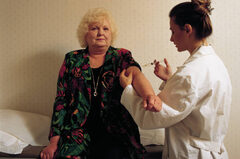
1. Any preventive, diagnostic and therapeutic medical intervention is only to be carried out with the prior, free and informed consent of the person concerned, based on adequate information. The consent should, where appropriate, be express and may be withdrawn by the person concerned at any time and for any reason without disadvantage or prejudice.
2. Scientific research should only be carried out with the prior, free, express and informed consent of the person concerned. The information should be adequate, provided in a comprehensible form and should include modalities for withdrawal of consent. Consent may be withdrawn by the person concerned at any time and for any reason without any disadvantage or prejudice. Exceptions to this principle should be made only in accordance with ethical and legal standards adopted by States, consistent with the principles and provisions set out in this Declaration, in particular in Article 27, and international human rights law.
3. In appropriate cases of research carried out on a group of persons or a community, additional agreement of the legal representatives of the group or community concerned may be sought. In no case should a collective community agreement or the consent of a community leader or other authority substitute for an individual's informed consent.
Article 7 Persons without the capacity to consent
In accordance with domestic law, special protection is to be given to persons who do not have the capacity to consent:
(a) authorization for research and medical practice should be obtained in accordance with the best interest of the person concerned and in accordance with domestic law. However, the person concerned should be involved to the greatest extent possible in the decision-making process of consent, as well as that of withdrawing consent;
(b) research should only be carried out for his or her direct health benefit, subject to the authorization and the protective conditions prescribed by law, and if there is no research alternative of comparable effectiveness with research participants able to consent. Research which does not have potential direct health benefit should only be undertaken by way of exception, with the utmost restraint, exposing the person only to a minimal risk and minimal burden and, if the research is expected to contribute to the health benefit of other persons in the same category, subject to the conditions prescribed by law and compatible with the protection of the individual's human rights. Refusal of such persons to take part in research should be respected.
Article 8 Respect for human vulnerability and personal integrity
In applying and advancing scientific knowledge, medical practice and associated technologies, human vulnerability should be taken into account. Individuals and groups of special vulnerability should be protected and the personal integrity of such individuals respected.
Article 9 Privacy and confidentiality
The privacy of the persons concerned and the confidentiality of their personal information should be respected. To the greatest extent possible, such information should not be used or disclosed for purposes other than those for which it was collected or consented to, consistent with international law, in particular international human rights law.
Article 10 Equality, justice and equity
The fundamental equality of all human beings in dignity and rights is to be respected so that they are treated justly and equitably.
Article 11 Non-discrimination and non-stigmatization
No individual or group should be discriminated against or stigmatized on any grounds, in violation of human dignity, human rights and fundamental freedoms.
Article 12 Respect for cultural diversity and pluralism 
The importance of cultural diversity and pluralism should be given due regard. However, such considerations are not to be invoked to infringe upon human dignity, human rights and fundamental freedoms, nor upon the principles set out in this Declaration, nor to limit their scope.
Article 13 Solidarity and cooperation
Solidarity among human beings and international cooperation towards that end are to be encouraged.
Article 14 Social responsibility and health
1. The promotion of health and social development for their people is a central purpose of governments that all sectors of society share.
2. Taking into account that the enjoyment of the highest attainable standard of health is one of the fundamental rights of every human being without distinction of race, religion, political belief, economic or social condition, progress in science and technology should advance:
(a) access to quality health care and essential medicines, especially for the health of women and children, because health is essential to life itself and must be considered to be a social and human good;
Solidarity among human beings and international cooperation towards that end are to be encouraged.
Article 14 Social responsibility and health
1. The promotion of health and social development for their people is a central purpose of governments that all sectors of society share.
2. Taking into account that the enjoyment of the highest attainable standard of health is one of the fundamental rights of every human being without distinction of race, religion, political belief, economic or social condition, progress in science and technology should advance:
(a) access to quality health care and essential medicines, especially for the health of women and children, because health is essential to life itself and must be considered to be a social and human good;
(b) access to adequate nutrition and water;
(c) improvement of living conditions and the environment;
(d) elimination of the marginalization and the exclusion of persons on the basis of any grounds;
(e) reduction of poverty and illiteracy.
Article 15 Sharing of benefits
1. Benefits resulting from any scientific research and its applications should be shared with society as a whole and within the international community, in particular with developing countries. In giving effect to this principle, benefits may take any of the following forms:
(a) special and sustainable assistance to, and acknowledgement of, the persons and groups that have taken part in the research;
(b) access to quality health care;
(c) provision of new diagnostic and therapeutic modalities or products stemming from research;
(d) support for health services;
(c) improvement of living conditions and the environment;
(d) elimination of the marginalization and the exclusion of persons on the basis of any grounds;
(e) reduction of poverty and illiteracy.
Article 15 Sharing of benefits
1. Benefits resulting from any scientific research and its applications should be shared with society as a whole and within the international community, in particular with developing countries. In giving effect to this principle, benefits may take any of the following forms:
(a) special and sustainable assistance to, and acknowledgement of, the persons and groups that have taken part in the research;
(b) access to quality health care;
(c) provision of new diagnostic and therapeutic modalities or products stemming from research;
(d) support for health services;
(e) access to scientific and technological knowledge;
(f) capacity-building facilities for research purposes;
(g) other forms of benefit consistent with the principles set out in this Declaration.
2. Benefits should not constitute improper inducements to participate in research.
Article 16 Protecting future generations
The impact of life sciences on future generations, including on their genetic constitution, should be given due regard.
(f) capacity-building facilities for research purposes;
(g) other forms of benefit consistent with the principles set out in this Declaration.
2. Benefits should not constitute improper inducements to participate in research.
Article 16 Protecting future generations
The impact of life sciences on future generations, including on their genetic constitution, should be given due regard.
Due regard is to be given to the interconnection between human beings and other forms of life, to the importance of appropriate access and utilization of biological and genetic resources, to respect for traditional knowledge and to the role of human beings in the protection of the environment, the biosphere and biodiversity.
[i] Guardianship keeps people in institutions and negates the right of people with disabilities to exercise legal capacity, an aspect of the right to recognition as persons before the law, in violation of UDHR Articles 2 and 6, and ICCPR Article 26, and in violation of CRPD Article 12.
[ii] United States ex rel Law Project for Psychiatric Rights v. Matsutani, et al. US District Court, District of Alaska, Case No. 3:09-cv-0080-TMB.
[iii] 67 N.Y.2d 485 (1986).
[iv] UDHR Articles 2, 3, 6 and 25, ICCPR Articles 7 and 26, CAT Articles 2 and 16, and CRPD Articles 12, 15, 17 and 25. CRPD Article 12 establishes that persons with disabilities have legal capacity on an equal basis with others in all aspects of life, including the right to make decisions about mental health treatment. See A/63/175, paragraphs 44 and 73-74.
[v] Civil commitment laws create a separate regime of detention and involuntary treatment applicable only to persons with psychosocial disabilities that is discriminatory in purpose and effect, contrary to U.S. obligations under UDHR Articles 2, 3 and 5, ICCPR Articles 2, 7 and 9, and CAT Articles 2 and 16, as well as CRPD Articles 14, 17 and 25.
[vi] Addington v. Texas, 441 U.S. 418 (1979) (civil commitment); U.S. v. Sell, Riggins v. Nevada, 504 U.S. 97 (1992).
[vii] See U.N. Doc. A/63/175 (2008), particularly paragraphs 40, 44, 47, 49, 50, 61-65, 73-74. This amounts to inadequate constitutional protection for persons with disabilities from practices that may constitute torture or ill-treatment, and violates U.S. obligations under UDHR Articles 2, 3 and 5, ICCPR Articles 2, 7 and 9, and CAT Articles 2 and 16, as well as CRPD Articles 4, 5, 15 and 17.
[viii] United States of America, Submission to the United Nations Universal Periodic Review Ninth Session of the Working Group on the UPR, Human Rights Council, 22 November 3 December 2010, Human Rights of Persons with Disabilities
"Ordinary people, simply doing their jobs, and without any particular hostility on their part, can become agents in a terrible destructive process. Moreover, even when the destructive effects of their work become patently clear, and they are asked to carry out actions incompatible with fundamental standards of morality, relatively few people have the resources needed to resist authority"
(Stanley Milgram, 1974)
The Milgram Experiment - Authority wins over Conscience
In 1963 a Yale University psychologist Stanley Milgram published his work on a social psychology experiment which measured the willingness of the participants to obey an authority figure and to perform acts which conflicted with their personal conscience. This experiment was controversial and by some considered unethical or psychologically abusive. In this experiment the participants were asked to deliver a set of questions to the subject and if the subject answered incorrectly they were to deliver an electric shock. The level of electric shock increased with each incorrect answer. In reality the subjects were actors and the real experiment was whether the participants would deliver a lethal electric shock if so ordered by a person in authority. Prior to conducting the experiment, Milgram did a poll and most felt that only very small fraction of participants would be prepared to inflict the maximum voltage. However in the experiment Milgram found that 65 percent (26 of 40) of experiment participants administered the experiment's final massive 450-volt shock, though many were very uncomfortable doing so; at some point, every participant paused and questioned the experiment, but still delivered the shock. Stark authority was pitted against the participants strongest moral imperatives against hurting others, and even over the screams of the victim, authority won more often than not.
Milgram, Stanley (1963). "Behavioral Study of Obedience". Journal of Abnormal and Social Psychology 67 (4): 371–8. doi:10.1037/h0040525. PMID 14049516. as PDF.
Milgram, Stanley (1974). Obedience to Authority; An Experimental View. Harpercollins. ISBN 0-06-131983-X.
Milgram, Stanley (1974). "The Perils of Obedience". Harper's Magazine. Abridged and adapted from Obedience to Authority.
Melbourne (1972) A version of the experiment was conducted in the Psychology Department of La Trobe University by Dr Robert Montgomery. One 19-year old female student subject (KG), upon having the experiment explained to her, objected to participating. When asked to reconsider she swore at the experimenter and left the laboratory, despite believing that she had "failed" the project
Blass, Thomas (1999). "The Milgram paradigm after 35 years: Some things we now know about obedience to authority". Journal of Applied Social Psychology 29 (5): 955–978. doi:10.1111/j.1559-1816.1999.tb00134.x. as PDF
Blass, Thomas (Mar/Apr 2002). "The Man Who Shocked the World". Psychology Today 35 (2).
Stanford Prison Experiment

The Stanford Prison Experiment (SPE), one of the most important psychology experiments in this country's history. In 1971 Stanford University Psychology Professor Philip Zimbardo, designed a research experiment to study how psychologically "normal" people would react to role playing as prisoners and guards while being immersed in a simulated prison environment for two weeks. Of the seventy-five people who applied, twenty-four males considered to be 100% fit and healthy (emotionally, physically, and psychologically) were selected to participate. Each of the participants was told that they would be going into a simulated prison environment for two weeks and that the roles of prisoner and guard would be assigned arbitrarily. Professor Zimbardo was to act as the Prison Warden and oversee the experiment. Twelve men each were randomly assigned to be a guard or a prisoner.
A mock prison, Stanford County Prison (SCP), was set-up in the basement of Stanford's psychology building. There were even bars put on windows, the cells were made of steel bars, there was a "yard" and "chow hall" area, and a windowless "hole." Through surveillance cameras Professor Zimbardo and his assistants to monitored the SCP 24 hours a day.
Once at the SCP the prisoners and guards dutifully played their roles. “Prisoners” were to be confined to the makeshift prison for the duration of the experiment, but guards were allowed to work eight-hour shift patters in teams of three. When not “working”, the guards were allowed to leave the site and resume their normal life. Wooden batons were given to the guards, although they were not supposed to be used to punish the prisoners. Prisoners were given ill-fitting garments, chains around their ankles, and assigned a number as part of a disorientation and depersonalization process. Prior to the experiment, the guards were told they were not allowed to physically punish the prisoners, but they could reinforce the sense of powerlessness prisoners would expect to feel in a real prison environment.
The first day of the experiment was uneventful, but by day two the situation inside the makeshift prison had begun to heat up. A riot broke out and some of the prisoners barricaded themselves inside their cell. The guards used fire extinguishers to break the riot and attempted to implement various psychological tactics as a way of regaining control. However, to the amazement of Professor Zimbardo and his assistants, within 24 hours an incredible transformation occurred: the "mock" prisoners became prisoners and the "mock" guards became guards. The SCP had morphed into being a prison. Some prisoners became passive while others became rebellious. The guards who did not participate in cruel punishments still did nothing to stop the guards that reveled in exercising their power over the prisoners. One guard was nicknamed "John Wayne" by the prisoners because he was so sadistic and changed Dr. Jekyll to the monstrous Mr. Hyde when he put on his guard's uniform. By the end of thirty-six hours, one of the prisoners was already experiencing a mental breakdown and was eventually released. As the days went by the guards as a whole flexed their power by increasing their aggressive, humiliating and dehumanizing tactics against the prisoners. More prisoners began to show signs of psychological stress and five more prisoners were released early. Finally on the sixth day the experiment was aborted after graduate student, voiced concerns as to the morality of the experiment. Christina Maslach, a graduate student and an outside observer, who saw the SCP for the first time after it had been operating for nearly six days was horrified to see that it had become indistinguishable from a real prison environment. She was able to convince Professor Zimbardo after a prolonged and impassioned argument that as administrators of the "prison" he and his assistants had become blind to the unconscionable activities happening in front of their eyes. The Standford Prison Experiment was a "controlled" experiment that had gone completely out of control. So after six days the SCP was abruptly shut down and the two-week experiment was terminated.
The Stanford Prison Experiment is frequently cited as an example of unethical research. The experiment could not be replicated by researchers today because it fails to meet the standards established by numerous ethical codes, including the Ethics Code of the American Psychological Association.
References:
The SPE: What it was, where it came from, and what came out of it," Philip G. Zimbardo, Obedience to Authority: Current Perspectives on the Milgram Paradigm, edited by Thomas Blass, 2000, pp. 201-.
Criminal Injustice: Confronting the Prison Crisis, edited by Elihu Rosenblatt, South End Press, Boston, 1996, p. 83.
Interview with Philip Zimbardo. The Believer. Found online at http://www.believermag.com/issues/200909/?read=interview_zimbardo
O'Toole, K. (1997, Jan. 8). The Stanford Prison Experiment: Still powerful after all these years. The Stanford News Service. Found online at http://www.stanford.edu/dept/news/pr/97/970108prisonexp.html
The Stanford Prison Experiment:A Simulation Study of the Psychology of Imprisonment Conducted at Stanford University. Found online at http://www.prisonexp.org/
Haney, C., Banks, W. C., & Zimbardo, P. G. (1973). Study of prisoners and guards in a simulated prison. Naval Research Reviews, 9, 1–17. Washington, DC: Office of Naval Research
Zimbardo, P. (2007). The Lucifer effect: Understanding how good people turn evil. New York, NY: Random House.
“Too often we underestimate the power of a touch, a smile, a kind word, a listening ear, an honest compliment, or the smallest act of caring, all of which have the potential to turn a life around.”
― Leo Buscaglia
Medical Whistleblower Advocacy Network
MEDICAL WHISTLEBLOWER ADVOCACY NETWORK
P.O. 42700
Washington, DC 20015
MedicalWhistleblowers (at) gmail.com
CONTACT
Educational Materials from Medical Whistleblower

Medical Whistleblower Canary Brochures
Advice to Medical Whistleblowers
Advice to Whistleblower Supporters
The Spiritual Side of Whistleblowing
Your Problem Solving Personality
PTSD - Emotional and Psychological Symptoms
Effects of Whistleblower Retaliation
Behind the Blue Line - Law Enforcement Whistleblowers
Medical Whistleblower Canary Notes
Bridging the Gap - Communicating Across Disciplines
Martin Luther King Jr. , Title 42 and 1983
White Collar Crime and Criminal Intelligence
United Nations Declaration of Human Rights
"Never impose on others what you would not choose for yourself." Confucius
"It is not the critic who counts; not the man who points out how the strong man stumbles, or where the doer of deeds could have done them better. The credit belongs to the man who is actually in the arena, whose face is marred by dust and sweat and blood; who strives valiantly; who errs, who comes short again and again, because there is no effort without error and shortcoming; but who does actually strive to do the deeds; who knows great enthusiasms, the great devotions; who spends himself in a worthy cause; who at the best knows in the end the triumph of high achievement, and who at the worst, if he fails, at least fails while daring greatly, so that his place shall never be with those cold and timid souls who neither know victory nor defeat."
Theodore
Roosevelt- Excerpt from the speech "Citizenship In A Republic",
delivered at the Sorbonne, in Paris, France on 23 April, 1910